Video Downloader: Save Video
- 3.9
- Rating
- 500.00K
- Installs
- Free
- Price

 Analysis by App-foxy
I approached Video Downloader: Save Video as a practical video tool rather than as a full editing suite. Its purpose is straightforward: help me download and manage videos so I can watch them later. That narrow focus is useful when I want a simple place for saved clips, but it also means the app should be judged by everyday clarity, control, and convenience instead of by advanced editing features.
The app comes from Apps For u and sits in the video players and editors category. It is free to install, rated for Everyone, and has reached over 500 thousand installs. Its average score is 3.9 from around 500 ratings, which suggests a mixed but reasonably positive response. I found that fair: the idea is easy to understand, yet a downloader still needs to make each step feel predictable, especially for people who are less comfortable with file handling or who rely on a calm, readable interface.
How Video Downloader: Save Video fits into everyday use
My first impression is that this is aimed at people who want fewer steps between finding a video and keeping it available for later. Instead of treating saved clips as temporary browser items, the app gives the task its own space. That can be handy for someone who watches tutorials during a commute, keeps reference clips for work, or wants entertainment ready when a connection is unreliable.
You May Also Like

 Pandora - Music & Podcasts
Pandora’s Music Is Easy to Start, but Harder to Recover
Pandora’s strength is its low-effort path from a seed to a station. Its weak spot is how much confidence it asks you to place in connection, setup, and quiet recovery.

 8 Ball Pool
 Is Built on Rivalries, Rematches, and Routine
A close look at the rivalries, rematches, shared routines, and unanswered safety questions that turn a quick pool match into a persistent mobile community.

 Samsung Music
’s Quiet Strength Is Playing What You Already Own
Its reach comes less from spectacle than from dependable access to a personal library. That simplicity is both the app’s strongest retention engine and its ceiling.

 AccuWeather: Weather Radar
AccuWeather Review: A Quick, Clear Forecast for Everyday Decisions
For everyday plans, the best forecast is the one you can understand quickly. AccuWeather makes rain timing, radar, and local conditions easy to act on, with a few trade-offs.

 Hill Climb Racing
Why Hill Climb Racing Still Turns Crashes Into One More Run
A tiny car, a bumpy hill and one more upgrade: Hill Climb Racing keeps resurfacing because its simple chaos makes every near-miss feel personal.

 AliExpress - Shopping App
AliExpress Makes Global Shopping Feel Personal, but Shoppers Bear the Risk
AliExpress turns a global marketplace into a pocket-sized discovery engine. Its reach is useful, its shopping loop compelling, and its trade-offs easy to miss.
More From Our News Desk
View All News


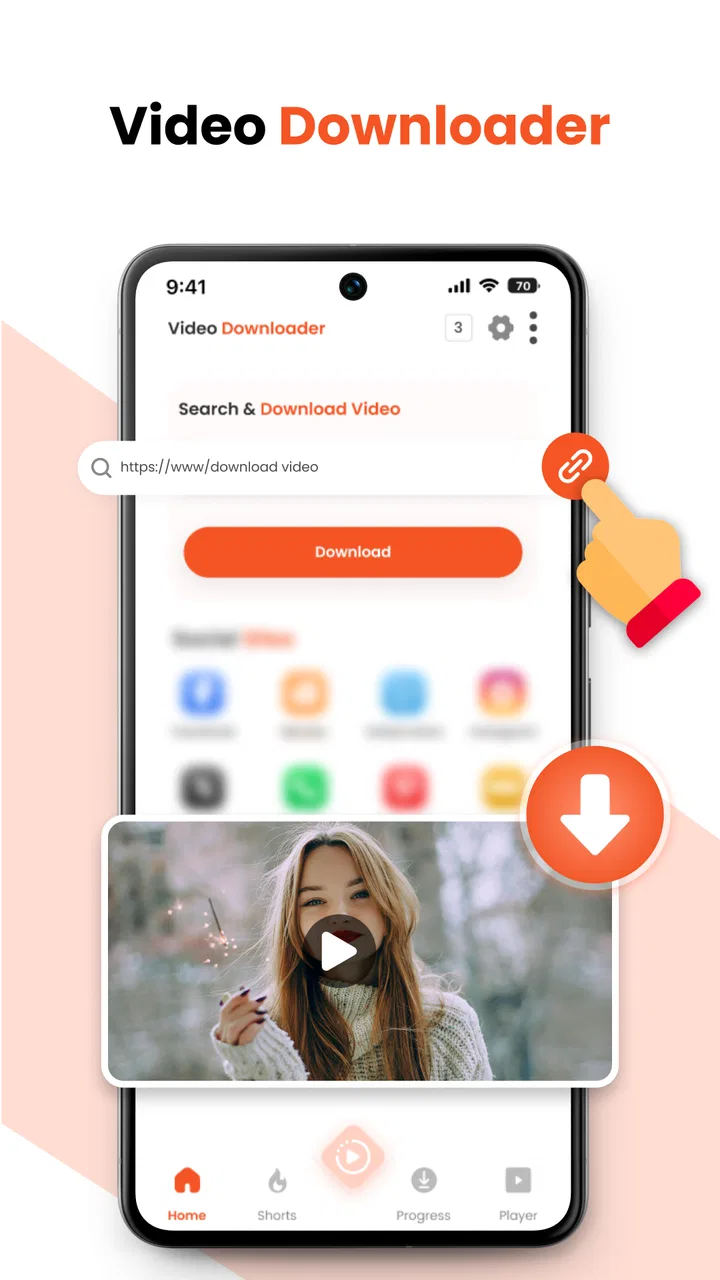
The most important question is not whether downloading is possible. It is whether I can understand what the app is asking me to do at each point. A clear sequence matters: identify the video, choose the relevant action, wait for the transfer, and then find the saved result. For users with limited technical confidence, familiar wording and visible progress are more valuable than a crowded collection of extra tools.
I would not position it as a replacement for a serious editor. The app is better suited to collecting and watching videos than trimming footage, adding captions, correcting color, or building a finished project. If my goal is to prepare content for publication, a dedicated editor is the better choice. If my goal is simply to keep selected videos together, this focused approach makes more sense.
Readability and navigation in the main workflow
For an app with such a specific job, readability should be judged by how quickly a new user can identify the next action. I prefer interfaces that keep the primary task visually separate from secondary controls, because download tools can become confusing when file actions, playback controls, and settings compete for attention. In this case, the value comes from keeping the journey understandable rather than making the screen feel feature-packed.
That simplicity can help people who read slowly, have difficulty processing dense screens, or are using a smaller phone. Short labels are easier to scan than technical explanations, and a focused layout reduces the need to remember where a control was located. I also find that a dedicated saved-video area is more approachable than asking users to search through a general file manager every time they want to watch something again.
There is a trade-off, though. A simple interface can leave experienced users wanting more visible control over organization. If I save many clips, I need a sensible way to distinguish them, recognize what is already stored, and avoid repeating a download by mistake. A downloader is only genuinely convenient when the library remains understandable after the first few videos.
My practical advice is to start with a small test download and then immediately check where it appears for playback. That one-minute trial answers two useful questions: whether the result is easy to locate and whether the app’s wording makes sense to the person using it. This is especially worthwhile when setting it up for a family member who may not be comfortable troubleshooting unfamiliar apps.
Motor and sensory considerations
People with limited dexterity often benefit from a workflow that does not require repeated tapping, precise gestures, or rapid responses. A downloader can be more comfortable than a browser-based routine when the main actions are presented as ordinary buttons rather than hidden behind complex menus. I would still use deliberate taps and avoid assuming that every control is equally easy to reach on every phone, because screen size and device layout affect comfort.
For users with visual fatigue, the practical benefit is a focused purpose: there are fewer reasons to move between unrelated screens. Saved videos can be easier to revisit than links scattered across browser tabs or messages. However, I would not treat that as a guarantee of suitability for low-vision users. Anyone who depends on a particular text size, contrast setting, screen reader behavior, or magnification workflow should test the app directly on their device before relying on it.
People who are sensitive to motion or sound may prefer using the app mainly as a storage and playback destination, with the phone’s own media controls adjusted to their comfort. The app’s role does not remove the need to consider the content itself: a saved video can still contain flashing imagery, loud audio, or rapidly changing scenes. The useful distinction is that keeping a clip available does not mean I have to watch it immediately or in the same environment where I found it.
For users who cannot depend on small touch targets, the best approach is to keep the workflow intentional: open the app, select one clear action, wait for confirmation, and verify the saved item before starting another task. That reduces accidental taps and makes it easier to notice whether a download has actually completed. I would rather follow that calm routine than queue several items without knowing which ones succeeded.
Situational access beyond the home Wi-Fi connection
The strongest use case is a predictable one. Imagine I am preparing for a long journey and want a few instructional videos available before leaving home. I can save them while I have a stable connection, check that they are visible in the app, and then use the saved collection later instead of depending on a train, hotel, or workplace network. This is more useful than the headline idea of downloading because it changes the timing of the task: I can prepare once and watch when conditions are less convenient.
The same workflow can help someone with an inconsistent connection, a limited data plan, or a schedule that leaves little time for repeated buffering. It may also suit a caregiver who wants to organize a small set of familiar videos before handing a phone to another person. In that situation, the important feature is not speed; it is reducing the number of decisions the viewer must make later.
There is a useful distinction between access and ownership. Saving a video in an app does not automatically mean the content can be shared, edited, or used for another purpose. I would use the tool for material I am allowed to save and would respect the platform’s rules and the creator’s rights. That is not just a legal consideration; it also prevents disappointment when a user expects every online video to behave like a normal personal file.
Travel is another situation where expectations need to be realistic. I would download and test a clip before leaving, rather than assuming that a title in a list guarantees successful offline playback. A quick verification catches problems while I still have a connection and gives me time to choose another option. This habit is more important for accessibility: if someone depends on a video for directions, learning, communication, or comfort, discovering that it is unavailable later can create unnecessary stress.
Where the experience still has barriers
The app’s focused purpose does not eliminate the friction that comes with downloaded media. Storage can fill up, file names can become difficult to recognize, and a growing collection can require more organization than a basic downloader provides. I would keep the library deliberately small, remove clips I no longer need, and avoid treating it as a permanent archive unless the app’s organization tools genuinely support that habit.
Another barrier is the gap between a simple label and a complete explanation. “Download” sounds clear, but users may still wonder where the item will appear, whether playback works without a connection, or what happens if a transfer stops. Those questions matter more for people who need predictable routines. I would not begin with a large batch; I would confirm one successful result, learn the app’s behavior, and then repeat the process.
People who need captions, audio description, adjustable playback, or specialized playback controls should judge the video experience itself rather than assuming the downloader provides those capabilities. The app’s category and purpose do not make it an accessibility player by default. If a particular video must be usable for learning or communication, I would check its accessibility options at the source and then test the saved version before depending on it.
Cost can also influence the decision. The app is free to install, but in-app purchases range from $5.49 to $104.99 per item. That makes it important to understand which part of the experience remains available without payment and whether a paid option is worthwhile for my own routine. I would not pay simply because I want a one-off saved clip; I would first establish that the app fits my storage, playback, and organization needs.
Compared with using a browser bookmark, this app may be more convenient when I need a local collection rather than a list of links. Compared with a file manager, it may feel more approachable for video-focused tasks. Compared with an official platform’s offline feature, however, the official option may offer clearer rights, better integration, or more dependable playback within that service. The best choice depends on whether I value a separate video library or tighter platform support.
Who should use it, and who should skip it
I would recommend trying it if I wanted a lightweight way to prepare videos for later viewing and did not need editing, publishing, or professional media management. It is also a reasonable candidate for people who prefer a dedicated video space over a cluttered browser history. The Everyone age rating makes it broadly approachable, although suitability still depends on the content being saved and on the user’s individual needs.
I would be more cautious for someone who needs guaranteed screen-reader compatibility, extensive library controls, or a carefully managed offline media system. In those cases, I would compare it with the phone’s built-in accessibility tools, an established media player, or an official service with documented offline support. A narrow tool can be easier to learn, but it may not cover the safeguards and controls that a specialized user expects.
I would also skip it as my main choice if I regularly edit videos, convert formats, manage large archives, or collaborate on media projects. Those tasks need capabilities beyond saving and watching. Installing a downloader for them would create extra steps rather than remove them.
Version, maturity, and my buying advice
The app was released on August 19, 2025, and its current version is 1.9. That places it in a relatively early stage compared with long-established media tools, so I would keep expectations measured. The install base shows that it has attracted substantial interest, but popularity alone does not answer the practical questions around organization, accessibility, or long-term reliability.
Before making it part of an important routine, I would test the complete cycle: locate a permitted video, save it, find it again, play it under the conditions I expect, and remove it afterward. I would repeat that with the person who will actually use the app if accessibility is a concern. Watching someone else navigate often reveals barriers that are invisible when I am already familiar with the interface.
I would also review the purchase screen carefully before confirming anything. A free installation is helpful for testing, but the listed range of optional purchases means I should know what I am agreeing to and whether the benefit matches my needs. For occasional use, the free experience may be enough; for frequent use, the decision should be based on actual convenience rather than the promise of a larger feature set.
My inclusive verdict
Video Downloader: Save Video is most convincing when I treat it as a preparation tool: save a few appropriate videos, verify them, and watch them later in a more convenient setting. Its focused purpose can support people who want less searching, less dependence on a live connection, and a simpler route back to selected clips. That is a meaningful advantage for everyday access, particularly when time, connectivity, or attention is limited.
At the same time, I would not describe it as a complete answer for every ability or context. Users who depend on specific visual, motor, hearing, or playback accommodations should test it with their own device and content. The app can reduce some navigation burden, but it cannot automatically solve captioning, audio-description, storage management, or platform-rights issues.
My recommendation is therefore practical rather than universal: try the free app with one or two permitted videos, check the entire save-and-watch routine, and decide from that experience. If the narrow workflow feels clear and the saved library remains manageable, it can be a useful companion for offline viewing. If I need deep accessibility controls, advanced media organization, or editing, I would choose a more specialized alternative instead.
FAQs for Video Downloader: Save Video
01What is Video Downloader: Save Video, and what can it do?
Video Downloader: Save Video is designed to help users save supported online videos for later access on their mobile device. Depending on the source website and the app’s current permissions, you may be able to paste a video link, detect downloadable media, choose an available quality, and manage saved files from within the app. Its exact compatibility can vary between platforms and websites.
02Is Video Downloader: Save Video free to download and use?
The application may be available as a free download, but some features can depend on advertising, in-app purchases, subscriptions, or usage limits. Before installing, check the listing for the current pricing details and review any trial terms carefully. Also remember that mobile data usage, storage, and downloads from external services may create additional costs.
03Where are downloaded videos saved, and can they be watched offline?
Videos saved through Video Downloader: Save Video are generally stored in the app’s download area or in a device folder selected by the application. Once a file has been completely downloaded, it may be available without an internet connection, although playback depends on the file format and your device. Storage permission and sufficient free space may be required.
04Is it legal and safe to download videos with this application?
The app itself does not automatically grant permission to copy or redistribute every video found online. You should download only content you own, content offered for offline use, or material that the copyright holder has authorized you to save. Avoid suspicious links, review requested permissions, and use official app stores whenever possible to reduce security and privacy risks.
05Why might a video fail to download or play correctly?
A download can fail because the website blocks third-party saving, the link is private or expired, the video uses an unsupported format, or the internet connection is unstable. Insufficient storage, denied permissions, battery restrictions, and outdated app versions can also cause problems. Trying a permitted public link, freeing storage, updating the app, or restarting the download may help.
Pros
- Simple interface makes saving videos quick for first-time users.
- Supports downloading multiple videos for convenient offline access.
- Built-in media player lets you watch saved clips without another app.
- Download progress indicators make it easy to track active transfers.
- Organized local storage helps you find downloaded videos more easily.
Cons
- Downloaded files can use significant storage space
- especially at high quality.
- Some websites or formats may not be supported consistently.
- Download speeds may depend heavily on the source website and connection.
- The app may show frequent advertisements during browsing or downloading.
- Saving copyrighted videos may violate platform rules or local regulations.

Video Downloader: Save Video
Gallery